

Ambulance Stretcher
Description
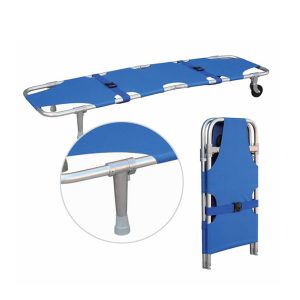
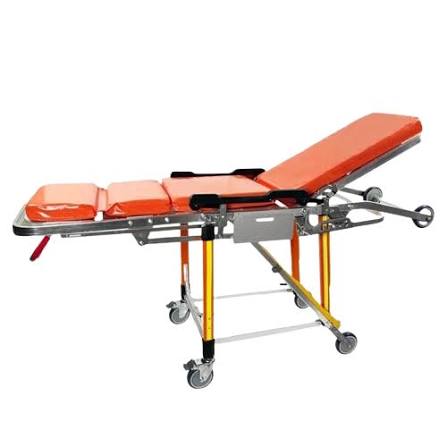
Ambulance stretcher is essential equipment for safely transporting patients during emergency response, ambulance transfers, and hospital-to-hospital transportation. It is designed to provide patient stability and comfort while allowing emergency medical personnel to access and treat the patient during transport.
Modern ambulance stretchers should prioritize patient safety, secure restraint systems, easy cleaning, durability, and reduced physical effort for ambulance crews.
Key Features
- Strong and durable frame for emergency patient transport
- Adjustable backrest for improved patient positioning
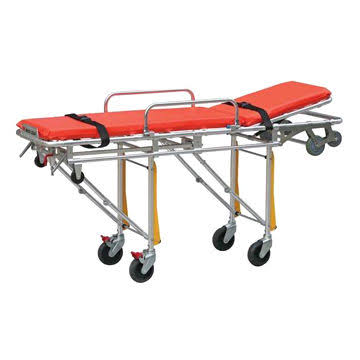
- Safety side rails to help prevent falls
- Secure patient restraint belts
- Smooth-rolling wheels for easy movement
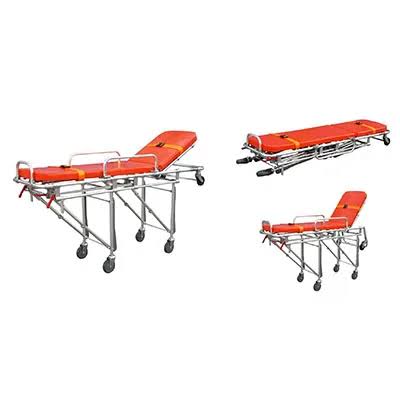
- Height-adjustable undercarriage
- Easy ambulance loading and unloading
- Comfortable, easy-to-clean mattress surface
- Durable and corrosion-resistant construction
- Suitable for emergency and inter-facility patient transportation
- Designed to accommodate medical treatment during transportation
How to Choose the Best Ambulance Stretcher
When purchasing an ambulance stretcher, consider these important factors:
1. Weight capacity
Choose a stretcher with a load capacity appropriate for the patients you expect to transport
2. Ambulance compatibility
Check the stretcher’s dimensions, undercarriage, loading height, and fastening system against your specific ambulance. Compatibility is particularly important because ambulance interiors and mounting systems can differ.
3. Patient safety
Look for strong side rails and quick-release patient restraints that secure the patient while still allowing medical personnel to provide treatment.
4. Ease of loading and unloading
A good stretcher should reduce the amount of manual lifting required by ambulance staff. Power-assisted models can further reduce physical effort during loading, unloading, and patient handling.
5. Adjustability
Consider adjustable backrest and stretcher height. These features make it easier to position patients and work efficiently inside the ambulance.
6. Construction and hygiene
Choose a stretcher made from durable, corrosion-resistant materials with a surface that can withstand frequent cleaning and disinfection, washable, waterproof and disinfectant-resistant patient-contact surfaces.
7. Wheel and braking system
Large, stable wheels and reliable brakes make the stretcher easier and safer to maneuver,requirements include four undercarriage wheels, with swivel capability and brakes on at least two wheels.
8. Manual or power-assisted operation
For frequent emergency use, consider whether a manual ambulance stretcher or power-assisted stretcher better suits your ambulance team, patient load and budget. Power-assisted stretchers are specifically designed to reduce operator effort.
Follow us for more updates
Facebook: Neptune Link Supplies
You can check our hospital bed from our website Neptune Link Supplies
Related products